
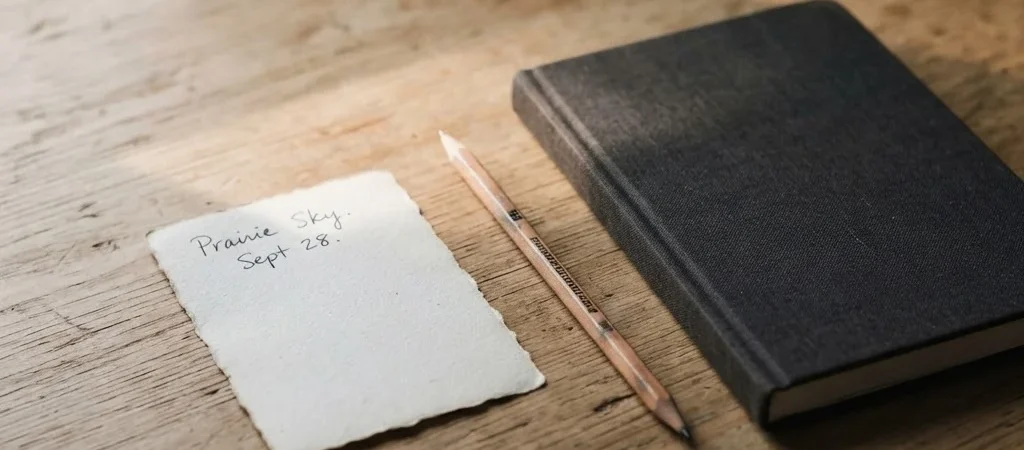
Some ideas need an essay; others are better kept as a brief observation while events are still unfolding. A note can be a way to mark a question before its edges are clear. Its value depends on being honest about that early stage, rather than borrowing the certainty of a finished argument.
Write down the live question
A useful note starts with something specific: a phrase in a public statement, a change in a policy discussion, or a tension between a stated principle and a proposed action. The observation does not need to settle the matter. It should give a reader enough context to see why the detail caught my attention.
That context is important when a subject is moving quickly. Without it, a short comment can sound more certain than intended or detach a point from the circumstances that gave it meaning. A sentence about what is known, followed by a sentence about what remains unclear, can keep the proportions right.
Keep certainty in proportion
Brevity is not a licence to skip the limits of an argument. If I have not checked a detail, the note should not imply that I have. If a conclusion depends on facts that may change, it is better to say so plainly than to present a provisional judgment as a settled one.
This is especially important around law and technology, where a new development can invite sweeping claims before the practical or legal questions are understood. I write about that subject in a separate publication, and this space is for a wider range of questions. Keeping the destinations distinct helps readers know what kind of writing they are opening.
Let a note lead somewhere
A note can remain short, or it can reveal the need for a longer piece. The test is whether more room would add reasoning, context or a meaningful counterargument—not simply more words. When the question has developed enough to support that work, an essay can make the path from observation to conclusion visible.
For readers, the useful habit is to treat a brief observation as an invitation to pay attention, not as the last word. For writers, it is permission to record a thought carefully before it is complete. The note does its job when it leaves the question clearer than it found it.